The three linked parts of this selection were initially published in First of the Month.
I would put my thirtieth birthday up against anyone's, but I wasn't thinking much about it at the time. In 1977 I was a resident of Ghana, learning drumming in several idioms. I had a small quarters in Accra, and I had a room in the northern Ghanaian town of Tamale. I moved around from place to place. In Accra I studied congas with Seth Ankrah, the wizard percussionist of Ramblers International Dance Band, and I hung out in the clubs, maintaining the friendships that fed my so-called research on the life of the post-colonial generation. Within that endeavor I developed Chernoff's First Rule of Research Methods: “Have fun: you'll get better data.” My two books that chronicle the lives of young people in West Africa — Hustling Is Not Stealing and Exchange Is Not Robbery — are evidence that there is really no need for a Second Rule. I was also continuing my involvement with Ewe drumming, barnstorming southeastern Ghana performing on Ewe drums with my friend and mentor, Gideon Alorwoyie. In Tamale I studied the drumming and culture of the ancient traditional society of the Dagbamba, continuing my apprenticeship with a learned drummer, Ibrahim Abdulai, and recording the lectures of the drumming elders describing their role in sustaining Dagbamba history and chieftaincy through epic songs and praise drumming. I was deep inside all of it.
I also attended traditional musical performances and festivals anywhere. From my Ewe experience drumming in the Yeve cult, I befriended priests and visited ceremonies in the Kukushi and Kwaku cults. From my base in Accra, I went to Adae festivals in Akwapim areas and Homowo festivals in Ga areas. Still, there was a fabulous one I had read about in a book on festivals of Ghana: the Golibo (or Gologo or Golob) festival in the Talensi area in the far north of the country. All I knew about the basic idea of that annual festival was something about asking the ancestors for help in the coming agricultural season.
The Talensi people are a small group made famous to anthropologists by Cambridge University Professor Meyer Fortes, who wrote two masterpieces in the 1940s on Talensi kinship and ancestorism. In those and later works, he represented Talensi family structure as an ubiquitous context for interpreting the vicissitudes of destiny and for grounding practical morality in divination and sacrifice. In Ghana, however, Talensi people were also known — or teased — or abused — because formerly they used to dress barely at all. Men who could afford it covered their private parts with a triangular cloth secured around their waist with strings, and if they had the means, an animal skin over their shoulder. Women wore beads around their waist to which they hung leaves or tied a cloth between their legs. Things have changed since then. I have seen a picture of Fortes doing fieldwork among them in the 1930s, with a pith helmet and shorts, inhabiting an iconic image of colonial distinctiveness. Still, his work was legendary. Years later, a chief in the Talensi area told me that he was a boy when Fortes did his work, and that when the elders with whom Fortes worked had passed on, the new elders would ask Fortes for advice and guidance in matters of custom because they trusted Fortes to know more about their culture than they did. I actually met Fortes shortly after I first arrived in Ghana in 1970. He picked me up when I was hitchhiking from Accra to the University of Ghana. He asked me what I was doing in Ghana, and I told him I had just got there and was mainly hanging out and getting a feel for the place. He responded that I was doing the right thing. And of course I took that advice to heart.
But I'm getting ahead of myself. From what I understood at the time, the Golibo festival took place on a plateau above the Frafra village of Tongo, well off the main road and about ten miles south of Bolgatanga, the major town of what was then the Upper Region of Ghana. I was in Accra, planning to return to Tamale, which is about 400 miles north, with Bolgatanga another 100 miles past Tamale. In those days in Ghana, I didn't have a phone, nor did most people. There were phones in offices that were often out of service. You typically had to get your information more directly. To learn the exact day of the festival, therefore, I went to the Arts Council of Ghana for an authoritative schedule. I was told, incorrectly it turned out, that the Golibo was coming on the Tuesday following Easter. That year my birthday, my thirtieth, fell on Easter Sunday. It seemed that everybody in the country was traveling home for the holiday. By pleading nicely, I managed to get a seat on a crowded bus for transport to Tamale on Saturday, arriving late in the evening. The Talensis are nominally under the control of the Frafras who live in the broader area around Bolgatanga, so the next morning, Easter morning, I got up early to see the Frafra chief in Tamale, a man who was the leader of the Frafras living there, to get more details. To my dismay, I was told that he had left for the festival which was coming on that very day.
I ran back to my room and threw some clothes into a shoulder bag and ran again to the main transport yard to go north. There was nothing moving. Easter Sunday: all the people who had traveled were at their destinations. Even in that predominantly Muslim town, everybody was relaxing at home on the holiday. I ran to the empty road and waited and waited. Finally I was able to flag down a sole passing pickup truck with room in the back bed, and I bounced my way to Bolgatanga around two in the afternoon. The place was deserted. I entered a bar and gave my bag to the barman, went outside and paced the main drag until I saw a motorcyclist. Stepping in front of him, I begged him and offered him some money to take me to Tongo, and he agreed.
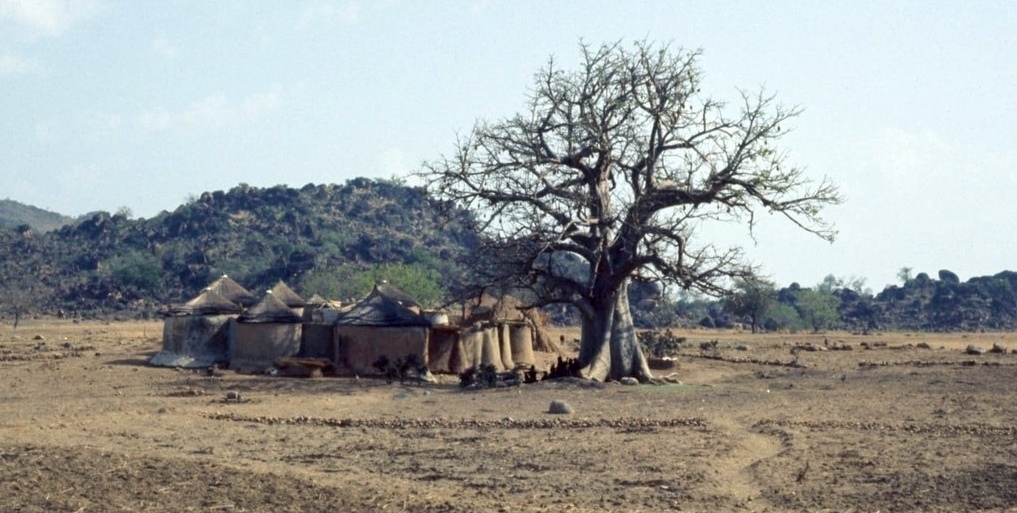
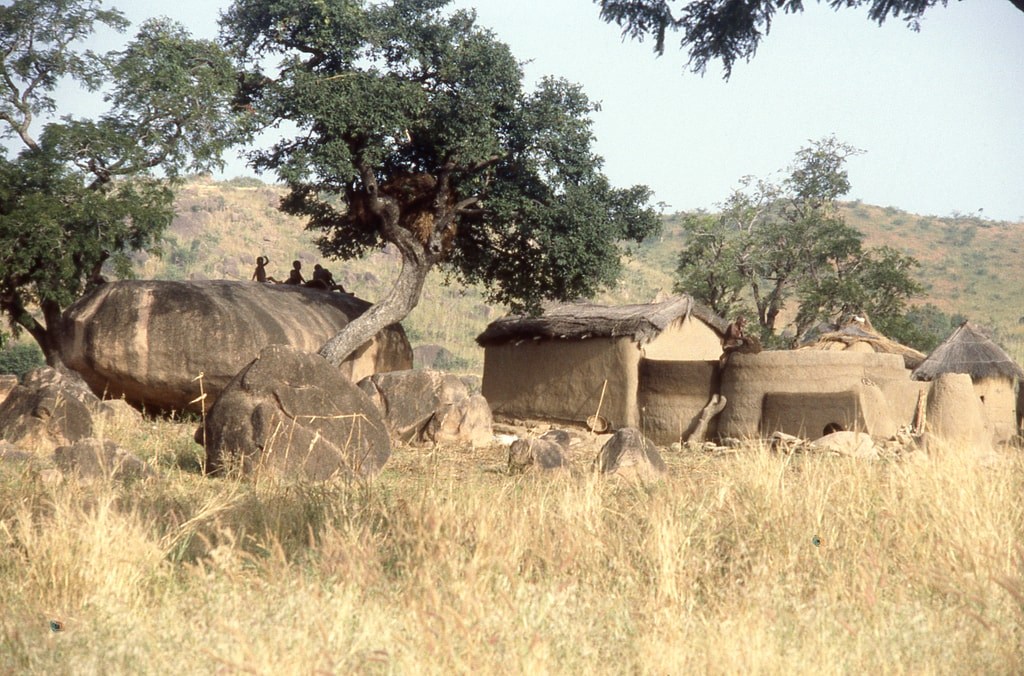
At Tongo I stopped to greet the chief of the village, who told me I had reached the place in time. The festival was supposed to start in the late afternoon. I thanked him and headed up for what was a bit over a two-mile walk to the center of the plateau. There were only a few people climbing a pathway through the boulders of the hill. When I got to the top, I thought I had stepped back in time. There were a few scattered compounds of mud houses, with adjacent family shrines for sacrifices. Apart from the houses situated among huge rocks, the barren plateau stretched out before me.
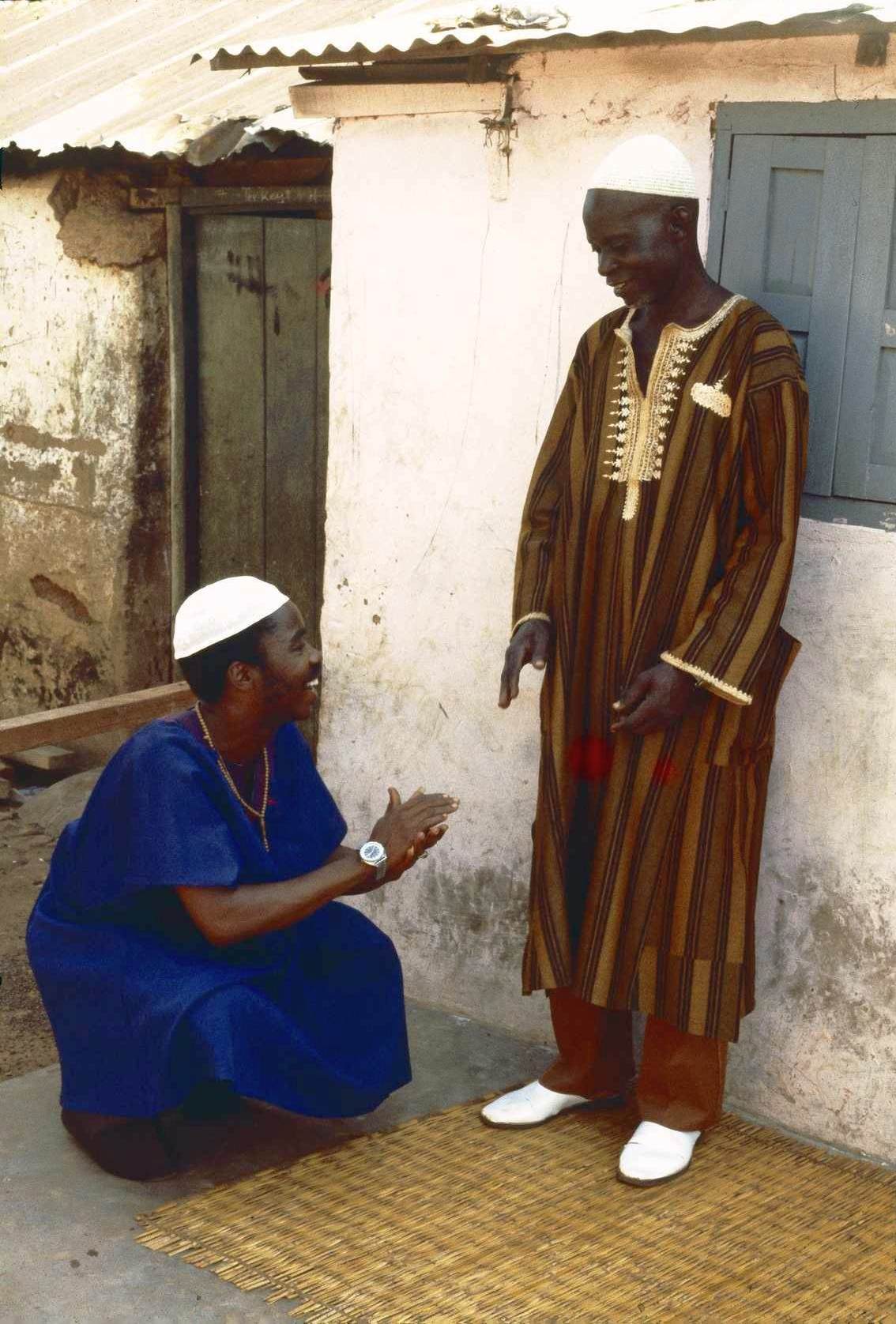
I walked to the center of the plateau and saw a man sitting against a wall outside a large compound house. Following custom, I squatted to greet him, and we exchanged a few pleasantries about why I was there. I asked where would be a good place to witness the festival. He directed me to a hill a few hundred yards from his house and suggested that I go about part of the way up. Would I first like to take some pictures from his roof? I did.
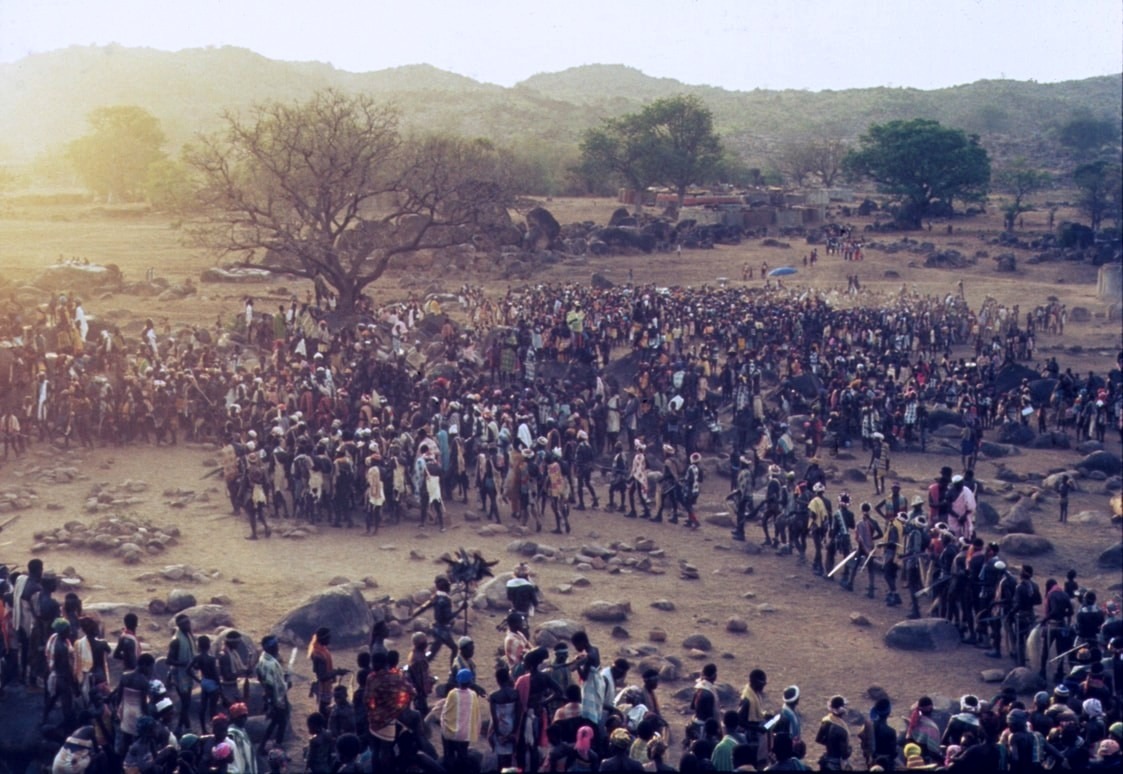
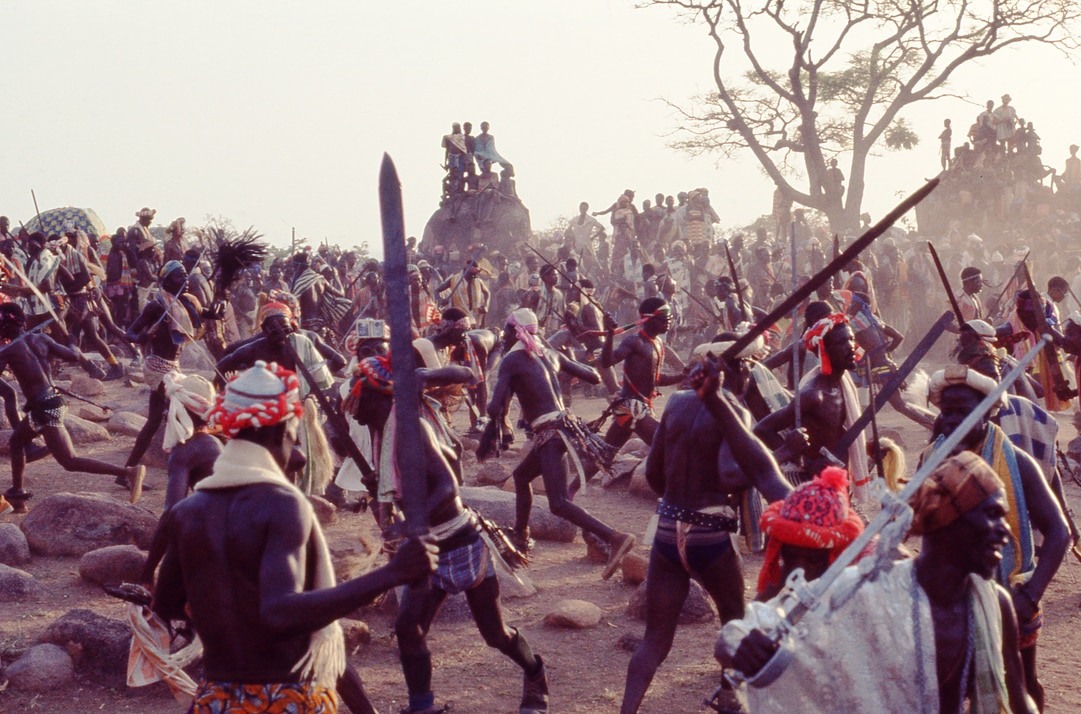
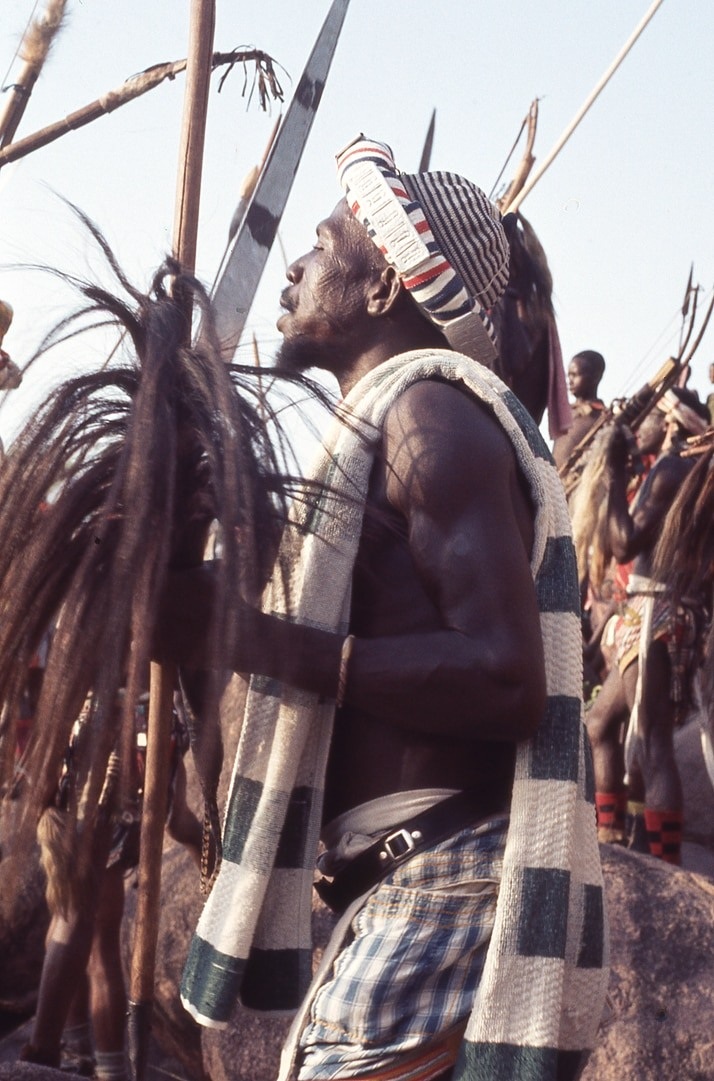
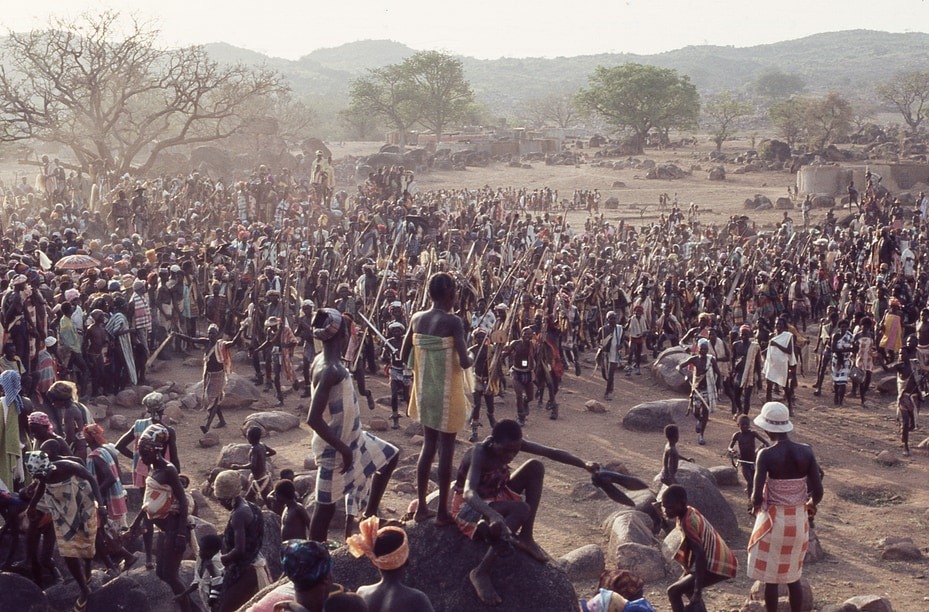
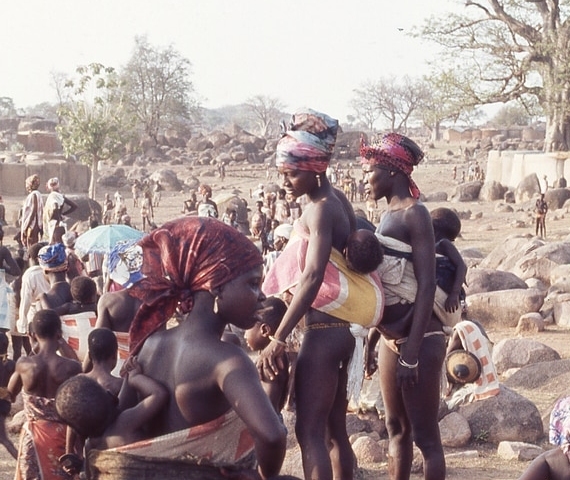
I had not been paying much attention beyond these courtesies, and my mind was wandering as I climbed through the rocks about a third of the way up the hill and found a perch on a large rock. When I turned around, I saw that the sight I had come for was one I could not have imagined. The few people who had been drifting around started arriving in numbers. Coming from different directions across the plateau were the different village and lineage segments, hundreds of men dancing and converging on the open area below me near the house I had just visited. They were carrying weapons — mostly long swords and also spears and bows and arrows. They were singing, and the song was beautiful. Heavy metal shakers tied around their ankles sounded the rhythms of their steps, but they did not get tired. Many were dressed in the old ways, as were the women who watched from vantage points near me. The dust the dancers raised filtered the sunlight into a golden haze. I descended into the scene among the dancers, taking pictures, and then I went back up the hill. As I turned around, one group of dancers arrived, gave a shout and ran up the hill, as if they were charging me, stopping just short of where I was. They turned around and faced the plateau, singing before they descended and joined the dance. I have never seen anything like it before or since. When the celebration died down, and twilight approached, I passed back to the householder and bade farewell, and I told him I hoped to return in the future.
I am only now coming to the point of my story, the sequel to the respect and greetings I had exchanged with the householder. A few months later, a friend of mine from home was making his way around the world, and he stopped to visit me in Tamale. He was lovely with all the people I was working with, and I thought he would also enjoy an excursion to the Talensi plateau. I had learned more about the place from my drumming elders because for the Dagbamba as well as for other people from all of Ghana, on the plateau is a well-known shrine known for healing, particularly infertility but also many other problems. That area of the plateau is called Tenzugu. Dagbamba call the shrine Yabyili, grandfather's house. The shrine is headed by a tengdana (tiŋdana in Dagbani), or holder of the land, who oversees treatments and sacrifices. Two of my project's co-authors, Kissmal Ibrahim Hussein and Mustapha Muhammad, accompanied us.
At that time, Ghana was living under the rule of a corrupt soldiers' government, whose economic mismanagement had so devalued the local currency that the black market rate for hard currency reached twenty-five times the official rate. The largest paper denomination was worth a bit more than a quarter, and it was harder to get hold of than the bills that were worth a dime or a nickel. Accra was the place to change money with businessmen looking for foreign exchange, and when I would travel north from Accra, I had to carry a suitcase full of money, as if I were in Weimar Germany. The shortage of foreign exchange resulted in shortages of nearly every commodity or raw material one can imagine. Sugar, tea, soap, tinned milk, detergent, medicines, cigarettes, matches, toilet paper, gasoline, beer, batteries, razor blades, and so on, to say nothing of appliances or vehicles or spare parts or — did I mention beer? Beer was difficult to find in the north. The bars in Tamale frequently put locally brewed and sour sorghum beer into bottles to serve their tables. The old people I was living with particularly missed their tea and sugar and milk. I spent a significant part of my time nurturing my friendships with people who had access to occasionally available imported or controlled goods that I could give to my elders and use myself. I had a time-consuming routine going around to visit them and inquire about potential arrivals. They understood me and supported my work just because. Some of them were Ghanaians from different places, like Joseph Owusu, an Akan who ran the Glamour store in Tamale; some of them were Europeans, particularly two Greeks — Peter Kassinikos and Theodore Skoufis — who worked for the major trading company Paterson Zochonis in Accra; as well as many others.
I was having a good time in Tamale, but Tamale could be tough. The pumps for the water system were not functioning well — no spare parts — and there was a water shortage. My single room was one of ten in a government quarters, and once a week a truck would come and fill a 1500-gallon tank. Everybody from the other nine rooms would rush to wash their clothes, bathe with two or three buckets of water, and whatever, and the tank would be empty in a day. There was a lone water pipe in a nearby field that sometimes dripped for a while at four or five in the morning, and I would sit with it for an hour or so to get maybe a half bucket of water for bathing. I would pour a few cupfuls of the water over myself, soap up, and use the rest to rinse off. Finally, I befriended the fire chief. I bought the biggest clay pot I could find in the market, about three feet high, and when I needed water, my friend would send a fire truck, and the firemen will pull their hose into my room and fill the pot. It was that kind of place. You needed people.
For our trip to Tenzugu, I remembered the graciousness of the householder I had met at the festival, and we gathered many, many scarce items to take to him, all kinds of stuff that he and his people might find difficult to get, as well as some cola nuts. We reached Tongo about midday. Throughout the broader cultural area of northern Ghana, you do not just go directly to a tiŋdana or tengdana. You are supposed to get a local householder or elder to give you somebody to lead you to see the priest, so we went first to see the Frafra chief of Tongo, whom I had met on the festival day, greeted him with cola nuts, and told him we wanted to visit the shrine and return. He called a young man to lead us. There was a Catholic mission in the village, and the people there offered us palettes to sleep on a floor in the mission, but more important, they said they had a case of beer. We told them we would definitely return that evening and asked them to hold it all.
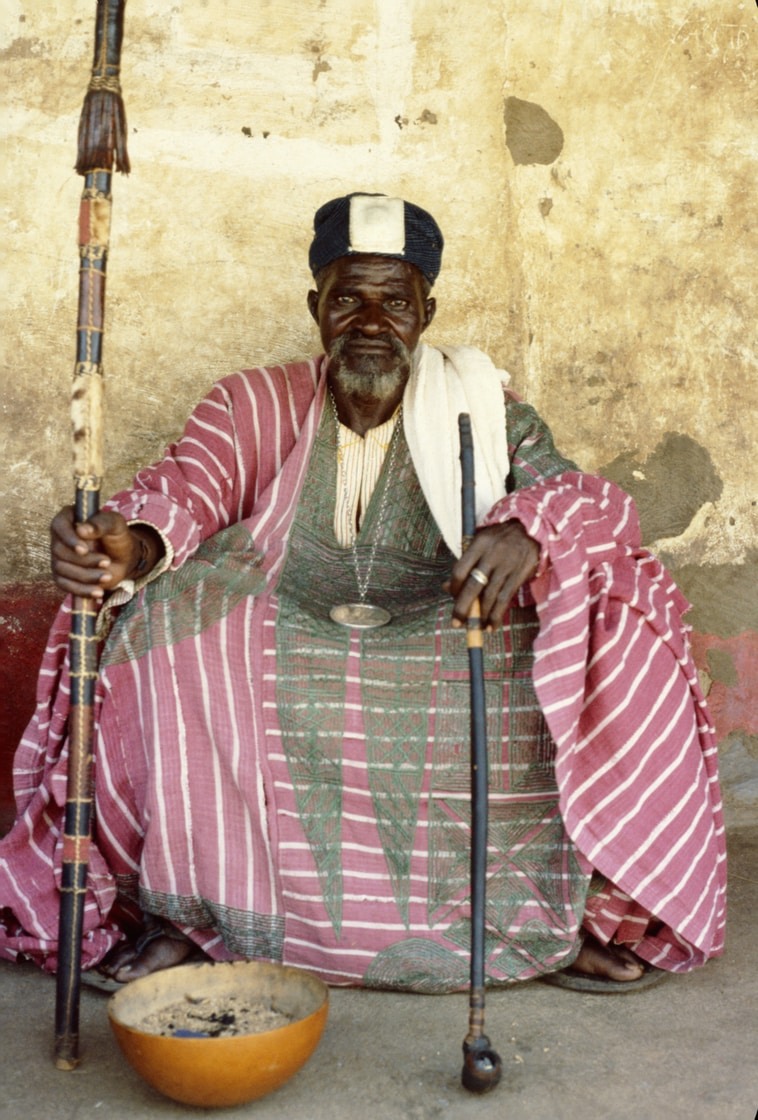
When we reached the plateau and went to the same compound from my trip to the festival, the householder was sitting outside with some elders. It turned out that he himself was the tengdana. His name was Yaazori Tengoli. He remembered me and made us welcome. He received our gifts with great appreciation. He took us to the cave where the god of the shrine was, and we sacrificed chickens and asked for the benefits we were hoping for. Then we returned to the house, whose many rooms were filled with people seeking the help of the tengdana. We had a very nice visit there, and the tengdana told us he had prepared rooms for us to spend the night. But the day was fading, and we were thinking of the beer at the foot of the plateau. We begged the tengdana to excuse us that we wanted to return to Tamale early the next day. To our astonishment, he said, “OK,” and he turned and brought out a huge sheep and said, “This is the sheep I was going to kill to feed you people tonight, but as you are not staying, you should take it with you.” He called a young man, who hoisted the sheep over his shoulders. The tengdana gave us a farewell, and we descended from the plateau, accompanied by the young man carrying the sheep.
When we reached Tongo and entered the mission compound, the beer was there, and also three full bowls of food, just for us. The chief of Tongo had slaughtered a chicken and had one bowl prepared; the people from the mission had slaughtered a guinea fowl for another bowl, and some people from the village had slaughtered another guinea fowl for the third bowl. That night we ate to hell. In the morning we found a truck and sat with the sheep in the back. Once in Tamale, we took the sheep to Ibrahim Abdulai. The next day he slaughtered the sheep and sent different parts to the elders in his area. We got our share and one of Ibrahim's wives made kebabs. My friend's hotel had somehow just received some beer from the brewery in Kumasi, and we managed to get a case for a kebab party with our friends. The next day, I received a letter from the University of Chicago Press that they wanted to publish African Rhythm and African Sensibility.
Squatting to greet an elder: Ibrahim Abdulai and Mustapha Muhammad, two of the authors of A Drummer's Testament
The chief of Tongo
A house on the plateau
Children on a rock outside a house
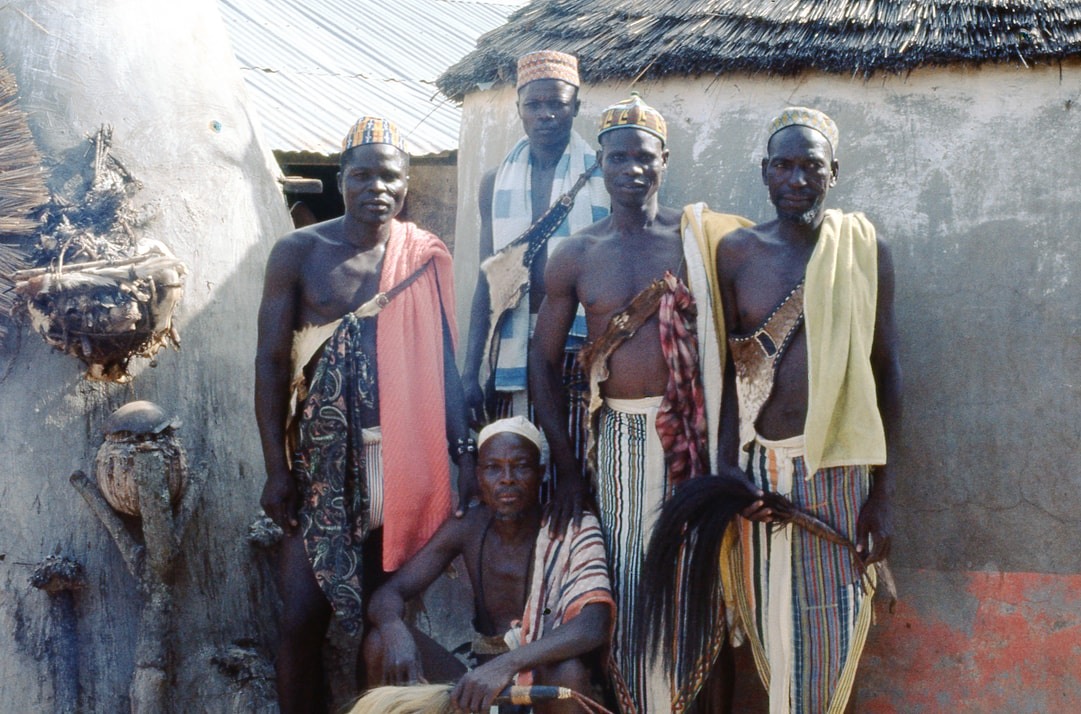
Men and a sacrificial shrine outside a house
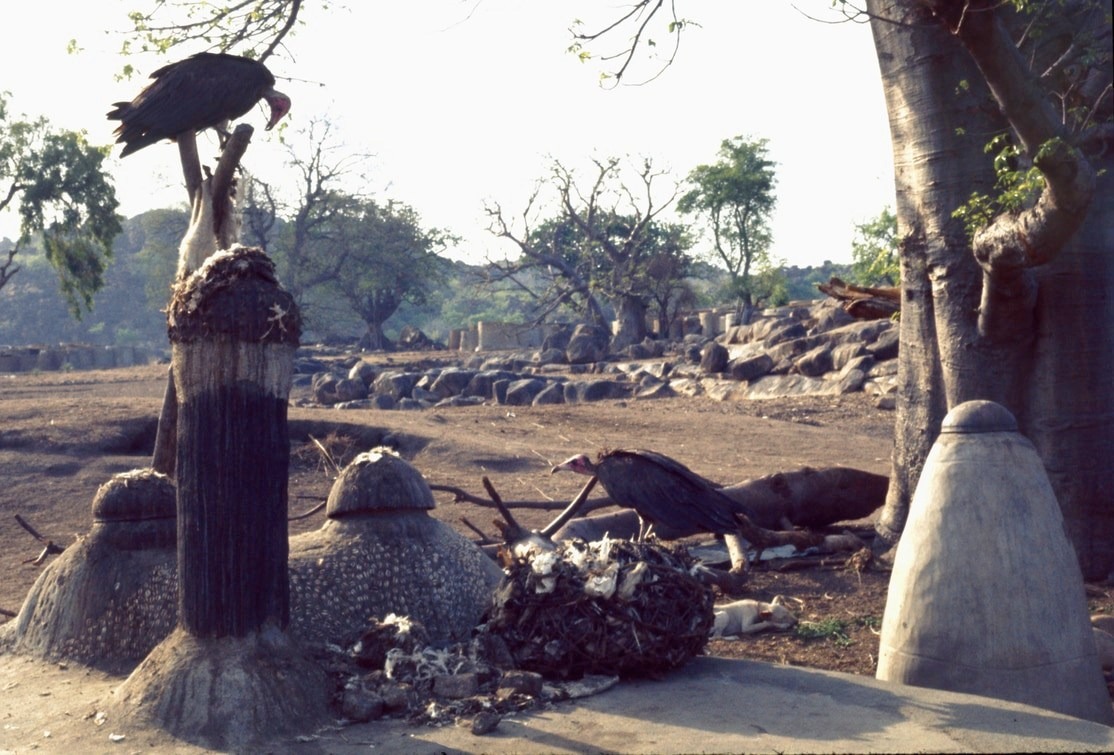
Sacrifices on an ancestor shrine outside a house
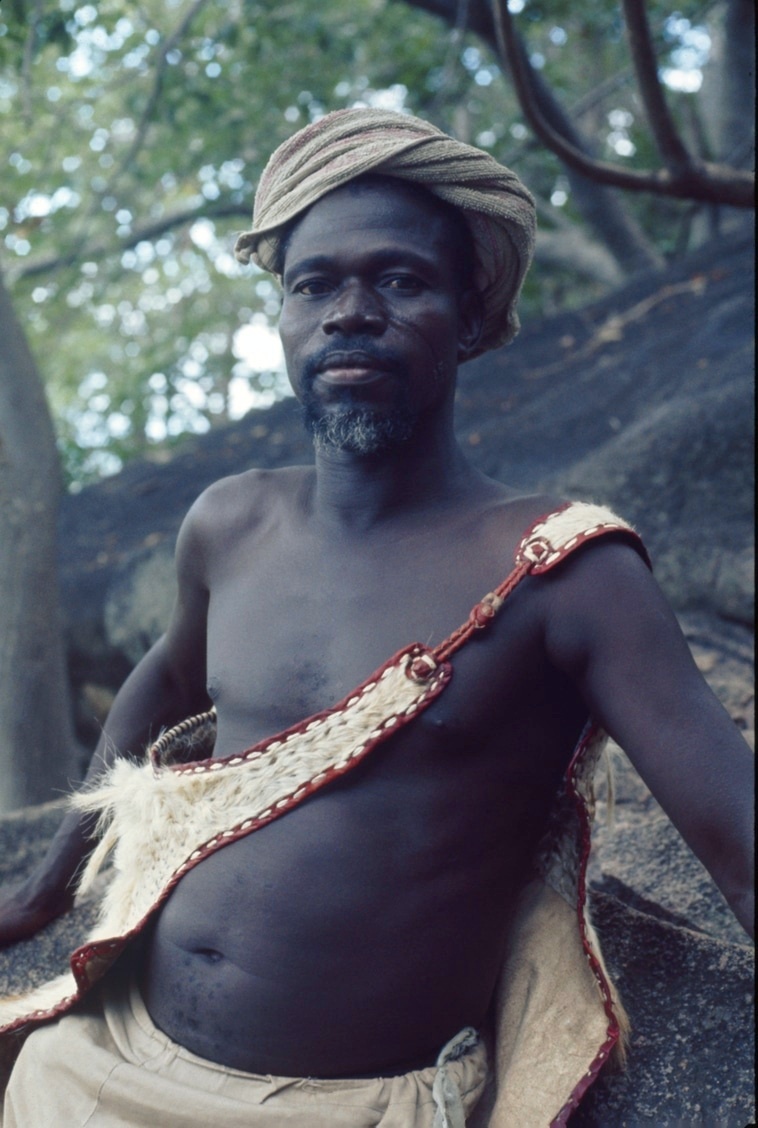
Yaazori Tengoli, tengdana of Tenzugu
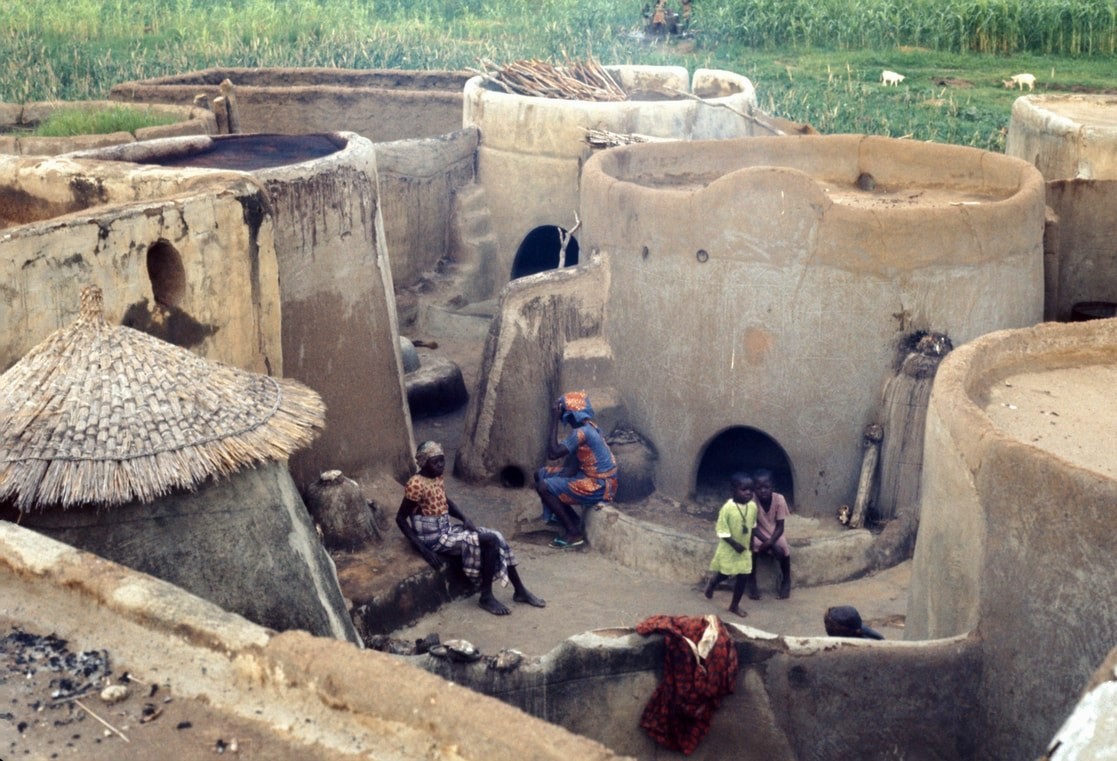
A view into the tengdana's house
The Golibo gathering seen from an adjacent hill
Among the dancers during the festival
Golibo dancer
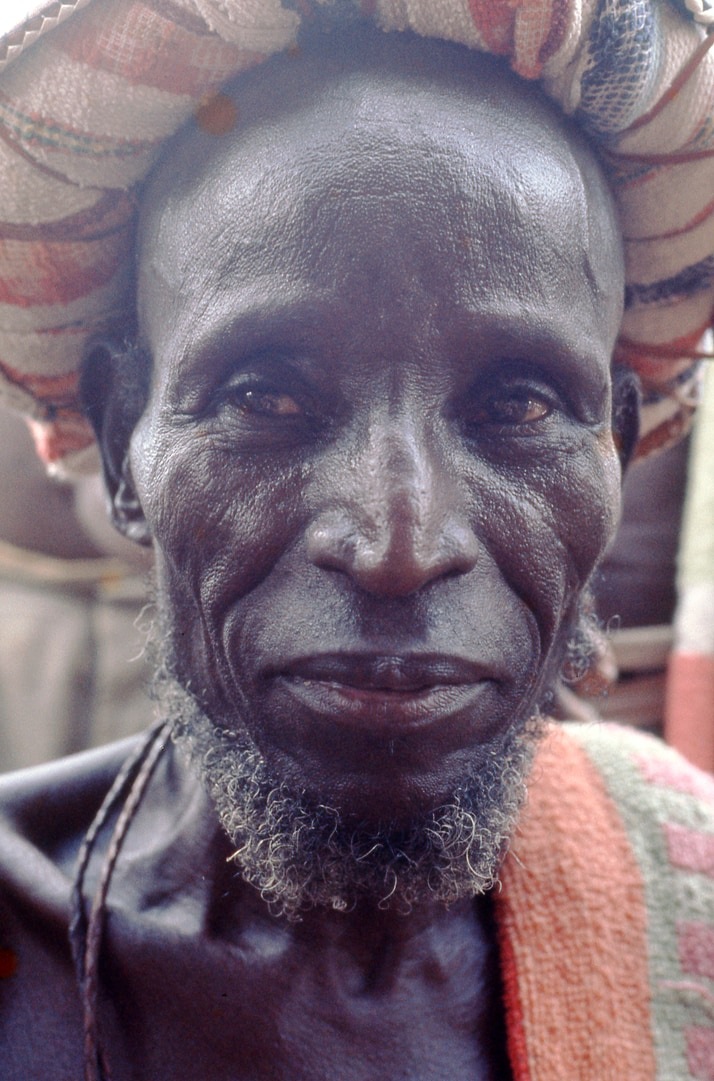
Elder at the festival
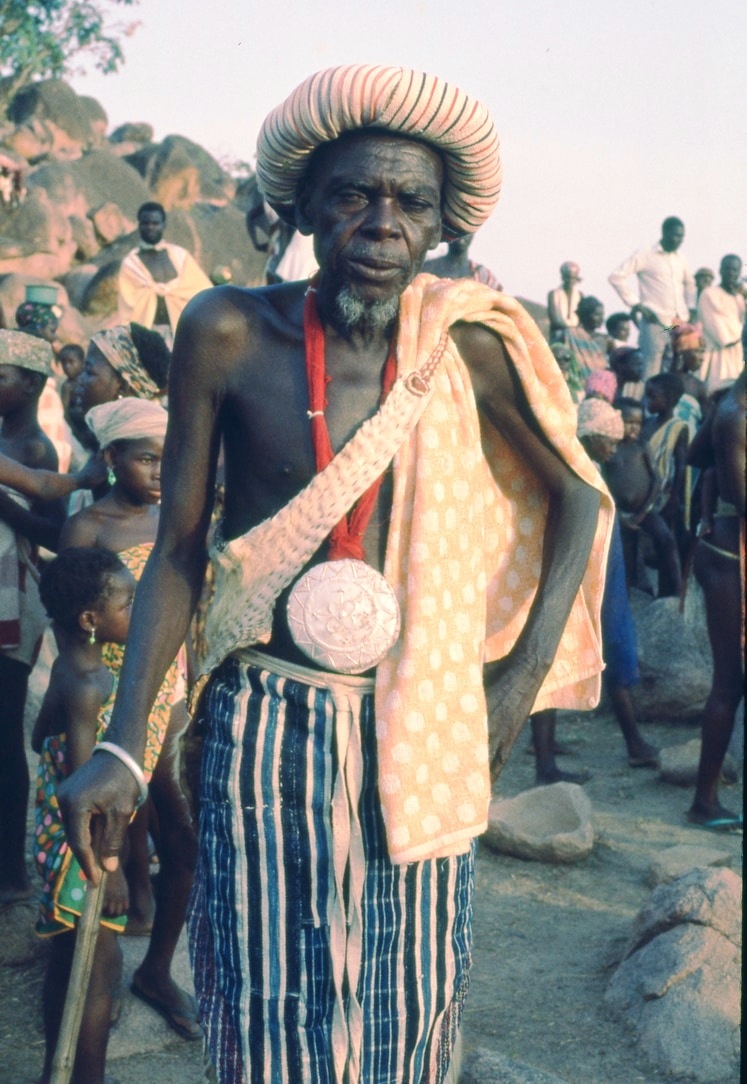
Elder on the festival day
Spectators watching the scene
Women spectators with children
Young woman spectator

The dancers charging the hill
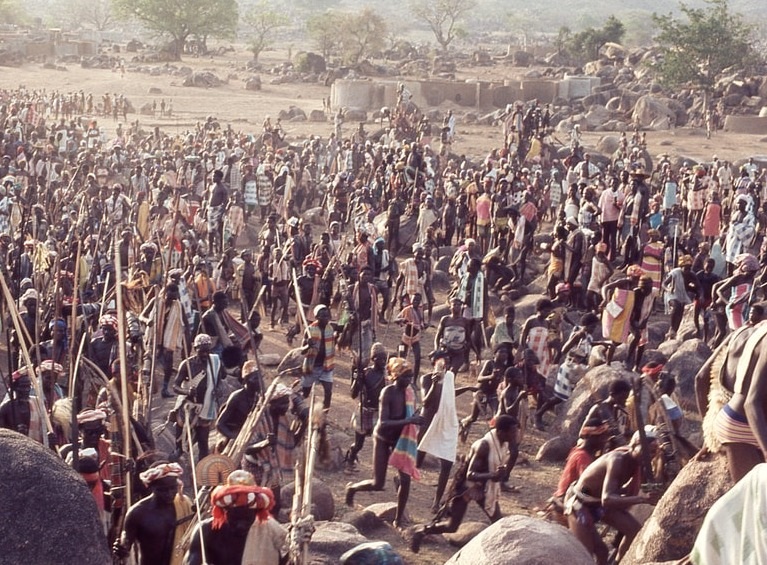
Dancers on the hill
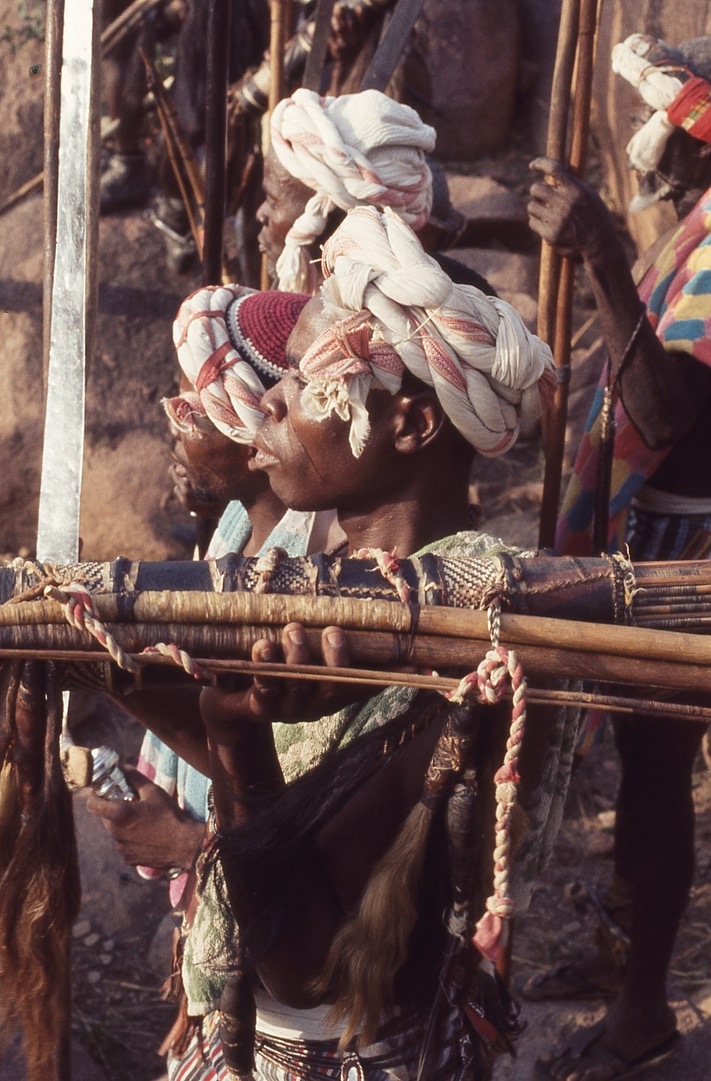
Elder on the festival day
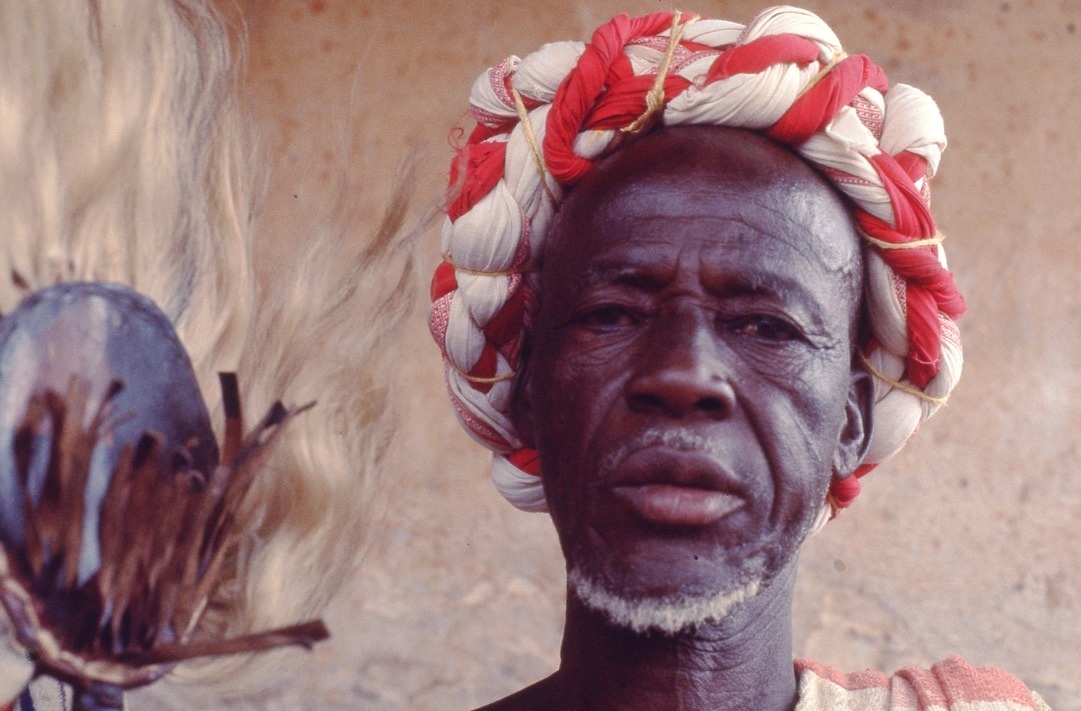
From Chapters 1-4 and 1-6 of A Drummer's Testament
In this time of widespread antipathy and abuse toward immigrants and outsiders, it is worthwhile to consider that in many African languages, the same word is used for “stranger,” “visitor,” and “guest.” The following excerpts from A Drummer's Testament are a complement to the anecdotal story about one of my experiences with gifts and reciprocity in two adjacent African societies in northern Ghana, the Dagbamba and the Talensi. A Drummer's Testament describes the culture of the Dagbamba people, a predominantly Muslim society with an ancient chieftaincy hierarchy. My story describes my experience among the Talensi people, a small society known through nuanced anthropological documentation for its practice of animism and ancestorism. These two very different societies share a deeper cultural base. Both exemplify similarly admirable values of civility and generosity.
Truly, I think in my heart that if you say that someone gives respect, it is inside his giving respect to strangers that you will know that truly, his sense on the part of respect is very great. And so the talk of strangers is another example I'm going to give you. In Dagbon here, the person we call a stranger has got his types. There is the stranger you don't know. Maybe this stranger is traveling, or he is coming to stay in your town for some time. Such a stranger is coming to meet you for the first time, and you don't know him. And again, there is the stranger you know. Such a stranger is coming from a different town to visit you, and even if he is your friend or your relative, we call such a person a stranger. As you are not staying together and you have not been seeing him, he is a stranger. And so a stranger and a visitor and someone who is coming to greet you from another town, we Dagbamba take them and group them to be the same thing. And when a stranger comes in Dagbon here, whether we know him or we don't know him, we will give him respect to the extent we can give. And I can say that even on the part of our living together with the people we stay with, a stranger has more respect.
Respect like what? You will get a stranger, and you don't know him. You will go and buy meat, and come and cook soup. You will give him water and he will bathe. You will give him a sleeping place, and he will sleep. And there will be laughter when we are sitting with him. Whether we know him or we don't know him, there will be no tying of the face. That is respect, and giving respect to a stranger is nicer than anything. And so it is good you get a stranger, and you respect that person. There is no one who knows the person he will gain from, and so you will even give respect to a stranger you don't know. And this alone is a big talk in Dagbon. Truly, strangers have a lot of talk in Dagbon, and the talk of strangers has no end. God says we should feed strangers, and we should look at strangers. A stranger gives blessings in this world and in the next world. And so we Dagbamba take a stranger to be a high thing, and we give respect to strangers. There are people in Dagbon here who always want strangers to be entering their houses. There are even people in Dagbon here who will cut food for a stranger even before they get a stranger. If a woman cooks food, when it's night, the man will let the woman cut one or two bowls and put down, just in case a stranger comes at any time, so that there will be food, and the stranger will have respect, and the man too will have respect. That is how our living is. It is there.
Truly, a Dagbamba man has no more happy day than the day he receives a visitor or a stranger. If you want to show yourself: it is when you get a visitor or a stranger. Then your heart is white. Whatever you have, what you eat, you will like the stranger to join you in eating. What you drink, you will like the visitor or stranger to join you in drinking. Where you sleep, you will like the stranger to join you in sleeping in the same place. There are even some people in Dagbon, and how their living is: if you receive a stranger and you take him out to greet your fellow friends, if it happens the stranger comes out and his clothes are not good, then you the person from the town, you will tell him, “Let's go back to the room.” If you have many clothes, then you will give him some of your clothes to wear, and you will take him around to greet your friends. All that is part of the white heart. He will be inside your house up to the time he will go, and he wouldn't become fed up. This is what we do.
As I have come to talk about strangers and how we give respect even to strangers, I can tell you that in the whole Ghana, there is no tribe who knows the respect of strangers more than the Dagbamba. The way you will receive a stranger and care for him, it is Dagbamba custom work you are doing. This is the reason why I say Dagbamba and other tribes are not equal. That is why we separate ourselves from all other tribes. When we see a stranger, we take him to be our mother's child. What you eat is what the stranger also eats; where you sleep is where the stranger must sleep. All that is inside our Dagbamba living; it is not separate. If you receive a stranger and you don't entertain the stranger or give respect to the stranger, then you are not a proper Dagbana. In Dagbon here, if you see someone who will receive a stranger and he won't care about the stranger, then you should ask the beginning of the fellow. You will see that his starting is not good. If we receive a stranger, then we are very concerned about the stranger.
If I have not seen anywhere, I have seen Ghana, and I know the South. In Dagbon here, when a stranger comes, he will sleep free. If he needs a room, he will get. If he is going to stay in that room for five days or a week, or even up to a month or more, he will sleep free. In the South, you cannot sleep like that, unless you know somebody. And sometimes, in the South, the one you know will have no place to sleep. If you go to meet him and he is sleeping with animals, you will also be there. But on the part of strangers in Dagbon here, it's not hard. Here, if you get a stranger, whether you know him or you don't know him, you will get a room and tell him, “Enter this room and sleep.” In Dagbon, we won't allow him to sleep in the sitting hall. If there are young men in your house, you will tell them to pack themselves into one room and give a room to the stranger. And so in Dagbon here, if you are a stranger and you don't have a room to sleep, it is also not a worry. And here too, feeding strangers doesn't worry us. How is it going to worry us? The food you eat is what he is going to eat. If it is that you drink milk, that is what he is also going to drink.
And so we Dagbamba have this thing: if a stranger comes and a Dagbana has the means, everything the stranger wants, a Dagbana would like to do it for the stranger. It's not because of anything. It's just so that when the stranger goes back to his home, he will praise the person he met in Dagbon. And Dagbamba have another thing: if a stranger comes, a Dagbana doesn't want the stranger to complain that it is because he is a stranger that this or that has happened in Dagbon here. It is only if there are no means, and the stranger wants something more than that, then in that case we don't have any talk inside it, because no one can do what somebody wants to the extent that fellow wants. But if the means are there, a Dagbana will try to get the stranger what he wants. We Dagbamba have that in our way of living.
And so when a stranger comes to you, you have to try your best on the part of the stranger. The visitor or the stranger has come to see how you are living. And the visitor or the stranger has come to give you some respect. And so in our Dagbon here, if somebody comes to tell you that he has come to see you, or he is a stranger, even if the fellow is a useless person, you should think that he has a backbone somewhere and strong people somewhere. He is coming and bringing his problem, and you the people who are going to receive him, the only reply you will give back to him will be that “We wouldn't want you to be ashamed, because if you are ashamed, it is going to affect all of us.” And so, when the stranger arrives, after greeting him, you will ask, “Where is my friend from?” If his heart wants, he will say, “I am from such-and-such a town.” And you will ask, “Where are you going?” He will say, “I have come to this town.” And you will ask him, “What do you want?” If it is that he wants knowledge, he will tell you. And you will say, “What knowledge?” When he tells you, if it is that he is looking for a maalam, or a blacksmith, or a tailor, or a drummer, and such a fellow is in your town, you will tell the stranger, “The work you want, it is these people who do that work. I will send you there to greet.” If it is a stranger who already knows the people of the town, nobody will have to take him to greet anybody. His name is: “He's from such-and-such a town and he has come. He has come again.” He is not a stranger in that town. When such a stranger comes, he enters into his staying house. . . .
As I have told you about our Dagbamba villagers, I can add salt to my talk and tell you that the day that a villager gets a stranger is the day he will eat meat and be satisfied. As for our villagers, they have a promise about that. If a villager is sitting down, he doesn't know if he is going to get a stranger, but he is raising more guinea fowls and hens at the village. Although he is keeping all these animals, he can't just catch one of them and eat it without any reason. But if he gets a stranger, he will say that they should catch one guinea fowl and kill it to make the soup taste sweet for the stranger to eat. The villager can't say that he himself wants to eat the meat. When a stranger comes, that is the day they will eat meat in their house, and that is the day the villager will enjoy himself. And so in the villages, they are looking after these animals, but they can't eat them unless they get a stranger. That is how it is in Dagbon here.
And you know, in a small village, there is no slaughter house or butcher so that you just can go and get some meat and make something for the stranger. And how it is, if you get a visitor, you wouldn't like him to eat a soup that is not sweet. And so any time a villager receives a stranger, he will tell the children in the house, “You see these guinea fowls? Go and catch two or three, and bring them to the house, so that they will make soup for the stranger.” Or: “Look, these three guinea fowls, catch them and bring them to the house. We will slaughter them and the visitor will eat better soup.” And truly, even if the stranger is not going to sleep in that town, they will catch a live guinea fowl or a live chicken, and they will tie it, and they will add it to any food that is there — say, yams or anything — and they will give it to the stranger to take it back to where he is staying. The stranger has come to visit you in the village, but the stranger said he's not going to sleep in that town or village; and so just on the part of respect, you have to catch the bird, tie it, and get something and add, and give all to the stranger to take and go. . . .
And so if you are going to greet your friend, it is good you go with at least one person. If you want, you take your son. If you want, you take one of your sitting friends from your town. You will say, “My friend, accompany me to this town,” and he will go along with you. If he accompanies you there, the respect they will be giving you, he will see it, and when he comes home, he is going to say it. If it is your son, your child is going to know that you have respect somewhere. And if you want, you will take one of your wives along. Your wife will also say, “Oh, as my husband is sitting down, he is not a useless man. When we went to such-and-such town, the respect they were giving him was very great.” If you go with this woman, the day she is going home, you will see your friend's wives: one of them will bring one round ball of dawadawa and give it to her and say, “Take this and go and make soup”; another one will measure dry okro, a full bowl; another one can bring out groundnuts and say, “Take this and go and crack and make soup.” This is what your friend's wives are going to be doing. If he has sisters, that is what they are also going to do. If your friend's mother is there, that is what she is going to do. And the young men in the house, they will also come out and say, “Here is ten pesewas: you should drink water on the way.” They are doing all that to your wife. And your friend and those he is sitting with in that town, on the day you and your wife are going home, they will also be giving gifts to this woman. They don't want her to go home and be seeing their fault. Inside it, the woman will like you to be going there every day, and she will know that you are a respectable person. This is how it is.
For more information on Yabyili and other regional shrines, see Gods and Shrines, chapter 2-24 of A Drummer's Testament
Direct links to the First of the Month articles: I, II, III